



Tuesday, 22 September 2026 02:30 AM
Company Update
DONGGUAN, CN / ACCESS Newswire / September 22, 2026 / Microduck's appeal lies in how much movement it brings to a small frame. Stepping, turning and shifting posture make compact biped robotics tangible-and raise a practical question for developers inspired by the platform: what does it take to drive those joints?
A smaller body does not make biped locomotion a simpler engineering problem. Within limited installation space, servos must carry changing loads, follow motion trajectories and work with other joints throughout each movement. Joint actuator selection plays an important role in taking a robot from its first movements to repeatable walking.
For teams developing Microduck-inspired bipeds and other compact multi-joint systems, KPOWER offers the RC10P and EXA4015 TTL coreless bus servos as actuator candidates to evaluate against their torque, speed and integration requirements.
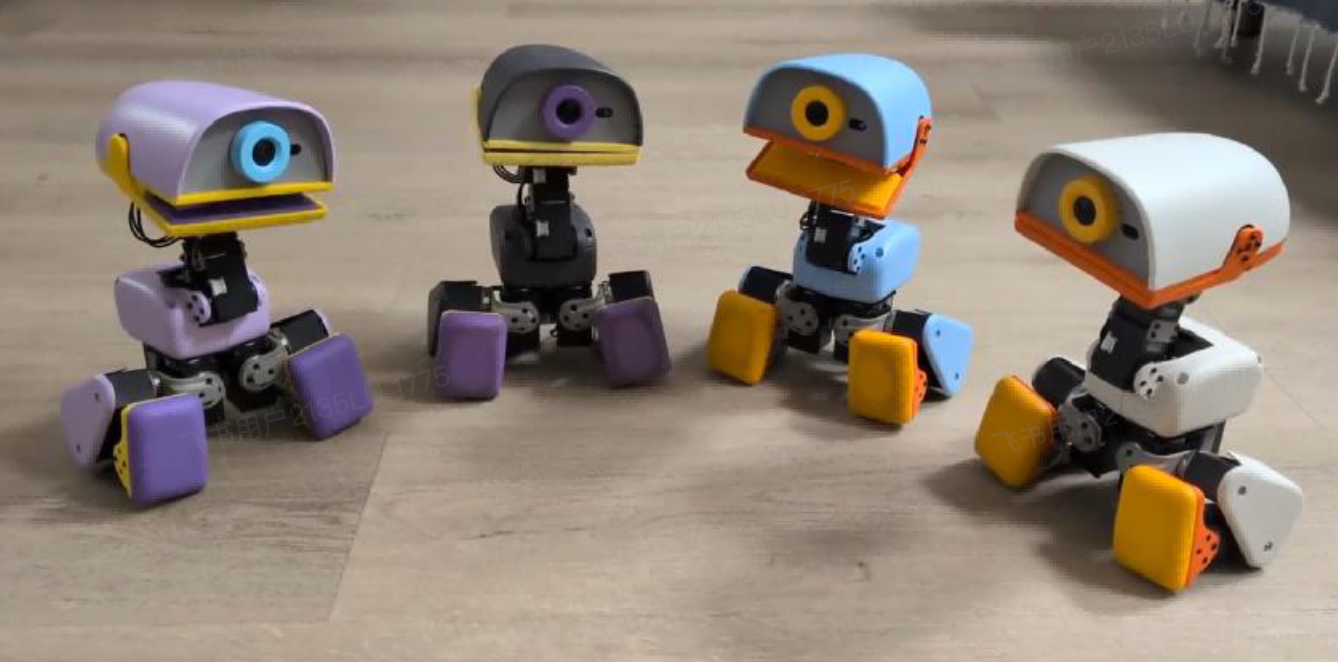
Behind the Movement: The Challenge of Compact Robot Joints
Unlike a wheeled platform, a biped robot continuously changes its support conditions as it moves. When one foot leaves the ground, the supporting leg carries more of the load. During foot placement and turning, several joints must follow coordinated trajectories.
These movements place connected demands on the actuators. Insufficient torque can prevent a joint from supporting the required motion. Inadequate speed under load can leave it behind the commanded trajectory. Gear backlash and structural flexibility can also affect posture control.
Meanwhile, servos, batteries, controllers and wiring compete for space inside the body. Actuator weight adds to the load that supporting joints must carry.
Choosing a small humanoid robot servo is therefore a mechanical, electrical and control decision. A maximum torque figure alone cannot establish whether a model will suit the complete robot.
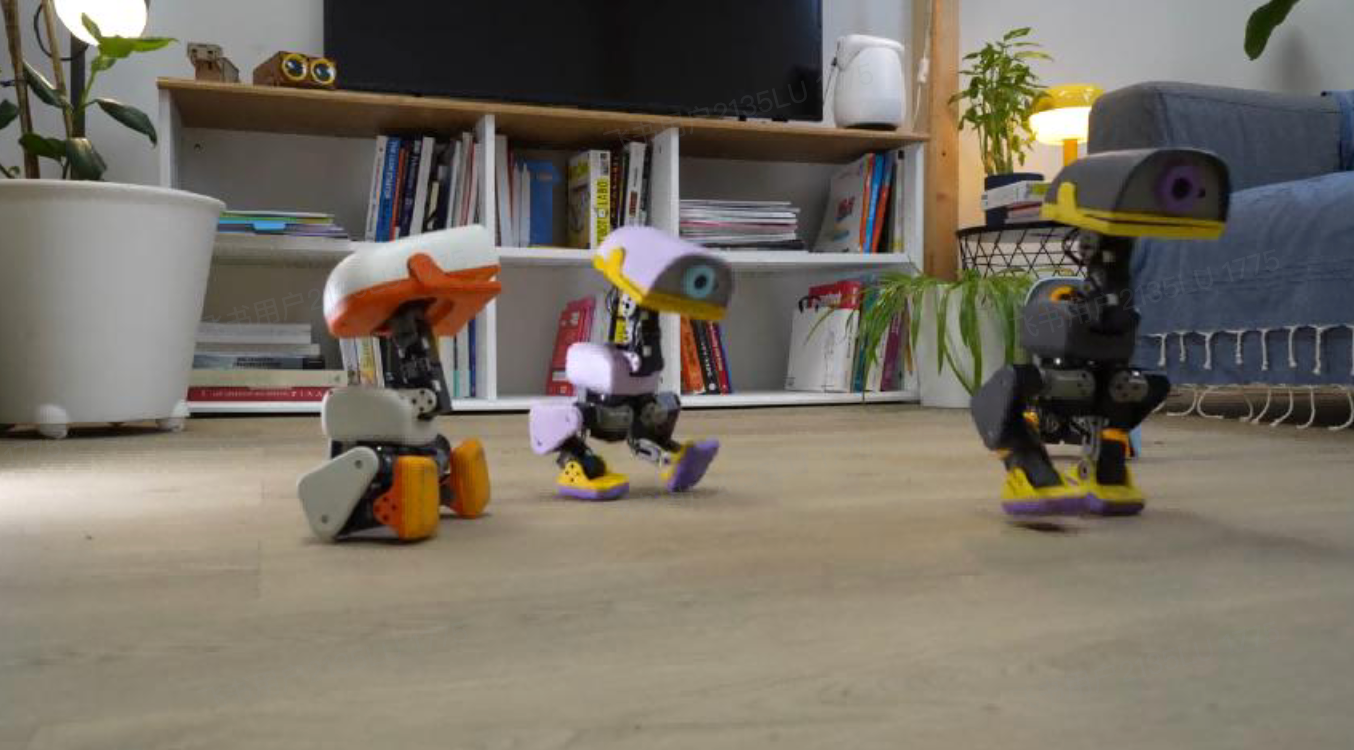
TTL Coreless Bus Servos Address Motion and Integration Needs
Combining a coreless motor with TTL serial bus communication provides one approach to the frequent starts, stops and coordinated movements of compact robots.
Coreless motors typically have relatively low rotor inertia, which can support responsive acceleration, deceleration and direction changes. These characteristics are relevant to biped joints that repeatedly adjust their angles, as well as head and arm movements in desktop AI robots.
TTL serial bus communication addresses a different requirement: managing multiple actuators. A controller can identify individual servos by their IDs and send commands over a shared bus. This can reduce separate control signal wiring and make a compact assembly easier to organize and maintain.
Bus connectivity does not, by itself, guarantee synchronized movement. Group commands, feedback data and operating modes depend on the servo protocol. Overall motion quality also depends on the motor, transmission, position feedback, control software and power supply working together.
KPOWER RC10P and EXA4015: Two Candidates for Compact Robotics
According to the supplied product information, the KPOWER RC10P and EXA4015 both use coreless motors and TTL serial bus communication, with listed stall torque of ≥10 kg·cm. Their listed no-load speeds differ, giving developers two options to assess against their intended movements.
| Specification | KPOWER RC10P | KPOWER EXA4015 |
| Motor type | Coreless motor | Coreless motor |
| Communication | TTL serial bus | TTL serial bus |
| Stall torque | ≥10 kg·cm | ≥10 kg·cm |
| No-load speed | 67 rpm | 60 rpm |
| Equivalent travel time | Approx. 0.15 s/60° | Approx. 0.167 s/60° |
Confirm specifications and test conditions against the official product documentation. Stall torque is not a continuous operating torque rating. No-load speed does not represent loaded speed or communication latency.
RC10P: A Candidate for Faster Joint Movements
The RC10P has a listed no-load speed of 67 rpm, equivalent to approximately 0.15 s/60°. It can be considered for prototypes requiring faster joint travel, including bipeds that perform frequent posture changes, gait transitions or turns.
Evaluation should establish whether the servo can complete the required movement with the intended linkage and load. Temperature rise, position holding and supply voltage during repeated operation are also relevant. No-load speed provides an initial comparison; loaded testing determines suitability for a particular joint.
EXA4015: An Alternative for Compact Multi-Joint Platforms
The EXA4015 has a listed no-load speed of 60 rpm, equivalent to approximately 0.167 s/60°, providing another TTL coreless bus servo option for compact robotics.
Developers can assess it for small biped robots, desktop AI robots and educational platforms based on motion range, timing and installation requirements. Where low-speed smoothness, noise or repeatable positioning matters, those characteristics should be tested under comparable conditions rather than inferred from torque and speed figures.
Different Applications Bring Different Priorities
The value of a Microduck-inspired platform extends beyond its appearance and movements. Compact multi-joint robots can support several development goals, each with different actuator priorities.
For maker prototypes, the immediate objective is often to complete mechanical assembly, connect the controller and validate basic movements. Accessible dimension drawings, protocol documentation and driver examples can make a substantial difference to development time.
For university teaching and student engineering projects, repeated assembly, troubleshooting and maintenance also matter. Clear joint addressing and manageable wiring help teams spend more time on motion control and system experiments.
For desktop AI robots, actuators contribute directly to the interaction experience. Turning, nodding and arm gestures may involve different loads from biped walking, but they introduce requirements for smooth movement, acceptable noise and sustained operation.
A small multi-joint robot servo solution should therefore be selected around the application, with specifications used as part of that assessment.
Validate a Critical Joint Before Scaling to the Full Robot
Once actuator candidates have been identified, a loaded joint or single-leg assembly can reveal problems before full robot integration.
Testing should cover movement under realistic loads, temperature during repeated operation, position holding and power behavior when several joints move together. Mounting holes, output interfaces, cable clearance and controller compatibility also need to be checked.
Power distribution deserves particular attention. A TTL bus simplifies communication connections, but the power supply, connectors and wiring must still accommodate multiple servos accelerating or carrying loads at the same time.
These checks turn product specifications into evidence that can guide the mechanical and control design, reducing avoidable revisions later in development.
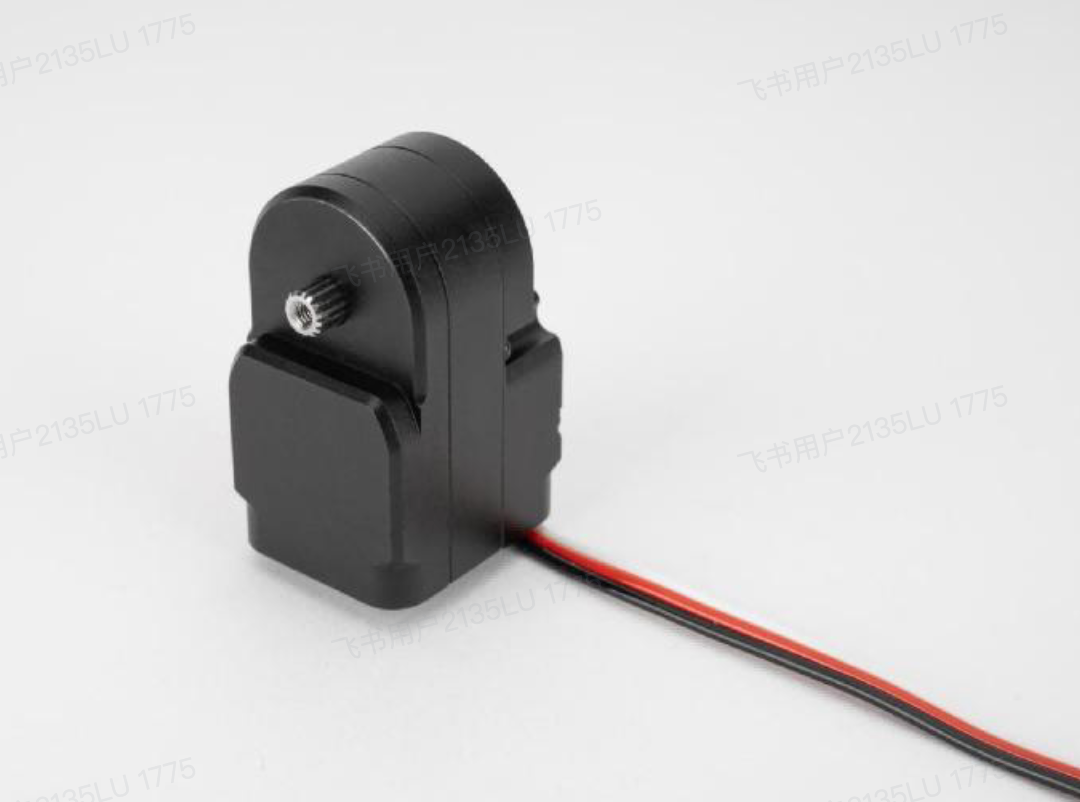
From Microduck Inspiration to a Working Prototype
Microduck makes the appeal of small biped robots visible. Turning that inspiration into a working platform means matching each joint's load, movement and connection requirements to a suitable actuator.
The KPOWER RC10P and EXA4015 TTL coreless bus servos provide two candidates for that evaluation. Robot weight, joint count, supply voltage, installation space and intended movements can help developers define a practical test plan and select a configuration for their project.
For product information and selection inquiries, visit the KPOWER official website.
Microduck is referenced solely as an example of robot form and development inspiration. This article does not imply that Microduck uses KPOWER products or that these servos are direct replacements for its original actuators.
Company Information
Company - kpower servo
Contact Person - garson
Email - [email protected]
Phone - +86 0769 8399 3238
Address - Dongguan, Guangdong, China
Website - https://www.kpower.com/
SOURCE: kpower servo